What is tiling matting and why or when is it needed?
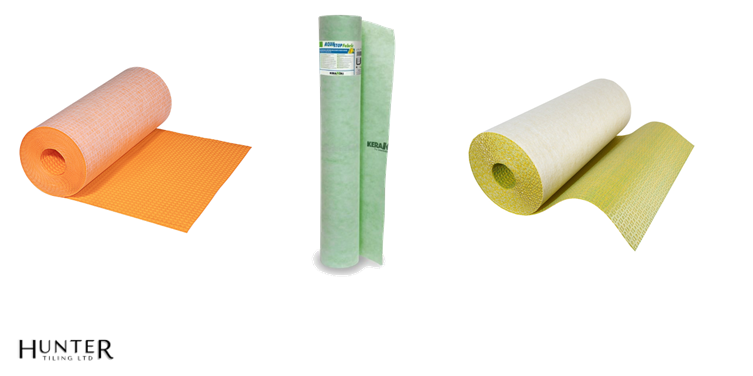
Matting, also known as de-coupling membrane or anti-crack matting has become prevelent in recent years for three main reasons, tiling onto plywood floors, underfloor heating and the increased size of tiles being used.
Plywood floors Lets get this out the way as its the easiest. Plywood, even if glued and screwed will flex. This can cause tiles to 'pop' or come loose, so matting is essential. Of note: Plywood is no longer recommended, or the cheapest option for boarding over floor boards as is common (you cannot ever tile onto floor boards). Concrete boards like 'no more ply' or 'Hardie' in 6mm are a far better product to use.
Underfloor heating requires mat to seperate the tile and its adhesive, from the heated floor below where a heated water pipe is set into a concrete screed. This causes the concrete slab to expand and contract with heat, so without matting the tiles could 'pop' or lose their bond from the floor. The mat is stuck down with a flexible adhesive, and the tiles stuck to the mat with flexible adhesive too, giving 2 layers of flex, as well as the mat to accomodate expansion.
Do you need tile mat with an overlay system like Wunda floors or similar?
My answer, and that of any reputable floor tiler would be a resounding yes! However many of the manufactuerers of these overlay heated floor systems say its not needed. If I were asked to tile an overlay without matting I would refuse the job, and request a disclaimer from the client, as I have seen so many heated tiled floors fail without matting. The thought of hot water pipes sitting directly under the tile and adhesive is a guaranteed fail in my opinion, especialy the foil board types where adhesive would contract and easily lose grip.
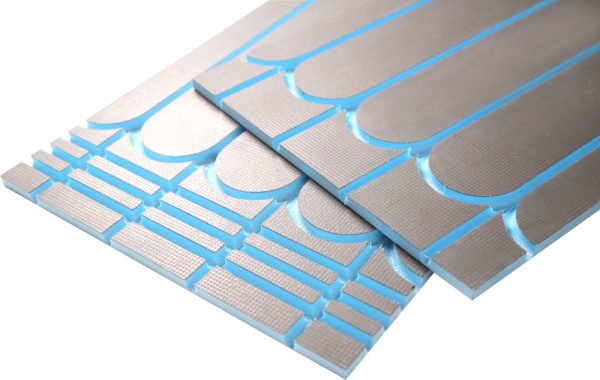
Overlay systems must be matted, contrary to what the manufactuerer states
Is matting needed for electric underfloor heating?
Even though electric tends to offer alot less heat than water fed systems, I am saying, with experience, to use matting again. Electric is only really suitable for small areas, like bathrooms, so the cost of 2,4 or 6m2 of matting is fairly insignificant. Compare this to the cost of the floor failing, and having to have the toilet etc , floor tile and possible first row of wall tiles removed if if does fail, its not a good gamble.
If you are having electric underfloor heating, we recommend a wire in mat system, which is far superior and uses a mat to be installed. Roll out electric heating kits have very thin wires that can easily be damaged, and the mesh tends to require self levelling over the top which is a pointless and messy layer of cost and labour. 'Wire in mat' systems tend to have a far thicker wire, can be routed to whereever needed (or not needed like under toilet) and a far better quality.
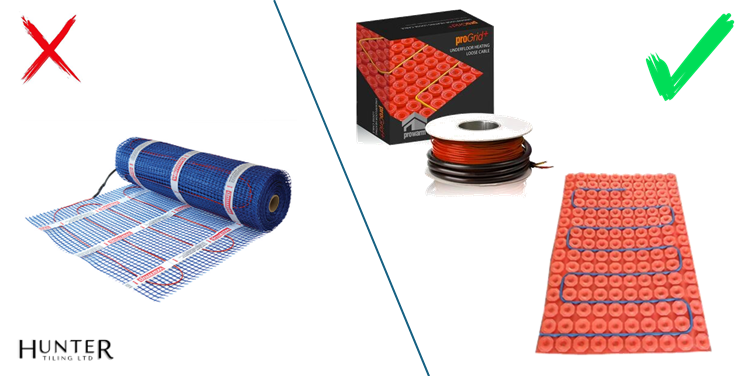
Using a wire in mat electric underfloor heating option is far superior quality
Ok, back to matting, we got side tracked....
You may hear the name Ditra, which is commonly used by some for matting. Its the same as how Hoovers are actually Vaccums, but the brand name Hoover gets used.
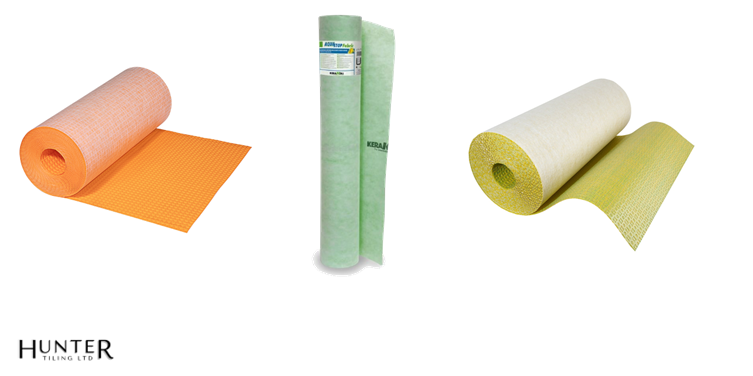
Schluter Ditra is a good mat, often used in commercial projects where Schluter have influence, but there aremany others that are effectvely the same and do the same thing. Dural is a yellow mat, Topps Tiles have their own called Excel, etc etc. Your tiler will have their preference, go with that as they trust it.
How thick is tile matting?
Its generally around 6mm, with another 2mm of adhesive to add to that. If you are really stuck for height and want to minimise that you can use thinner membranes like Kerakol Isomat or Bal Rapid mat which are only 1mm thick.
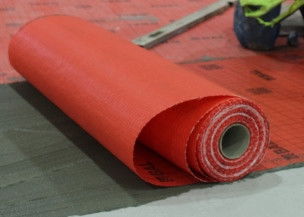
Bal Rapid Mat is only 1mm thick, unlike most at 6mm
Waterproof tile matting for bathrooms, a good choice.
Why not prevent any moisture into the subfloor with a waterproof type, especially in rooms where you have a tiled shower tray, as matting like Kerakol Aquastop is thin, and can be overlapped onto, or by the shower board to stop any moisture finding its way downward.
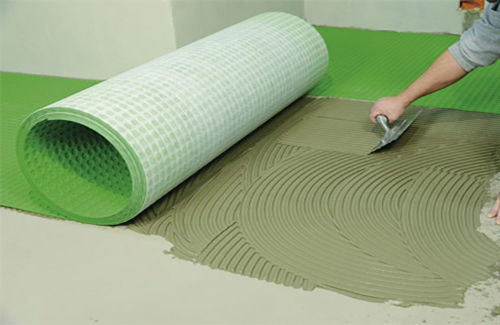
Thats about as much as you need to know for decoupling matting, ask your Tiler for their recommendation.